How Lifestyle Medicine Supports Mental Health | Integrative Psychiatry in the U.S.

How Lifestyle Medicine Supports Mental Health explores the powerful connection between daily habits and psychiatric stability. This article explains how nutrition, sleep, exercise, stress regulation, and social connection directly influence brain function, inflammation, mood regulation, and treatment outcomes. It highlights how lifestyle medicine strengthens evidence-based care for depression, anxiety, ADHD, OCD, bipolar disorder, schizophrenia, borderline personality disorder, trauma/PTSD, eating disorders, addiction, postpartum mental health, and autism spectrum disorder. From circadian rhythm stabilization in bipolar disorder to metabolic health considerations in psychosis, the article demonstrates how integrative psychiatry blends psychotherapy modalities like CBT, DBT, ACT, and EMDR with lifestyle-informed strategies. Rather than replacing therapy or medication, lifestyle medicine enhances long-term resilience and recovery. The piece concludes by introducing Integrative Psych as a national integrative psychiatry practice offering whole-person, evidence-based mental health care through both in-person and virtual services across the United States.
Stress related to overworking: Causes, mental health impacts, and recovery

Learn how stress related to overworking affects mental health and practical steps for recovery, including therapy and medication options.
Beyond the Stigma: Why Medication and Therapy Are Strength, Not Weakness
Stigma has deep roots: Historical views of mental illness as a “moral failing” still impact how we view treatment today. Biology matters: Mental health conditions are physiological issues, much like diabetes, and often require medical intervention. The “Easy Way Out” is a lie: Medication is not a cheat; it is a tool that levels the playing field so therapy can be effective. Language shapes reality: Changing how we speak about “drugs” vs. “medicine” is crucial for destigmatization. Combined care is best: Research supports using both medication and therapy for the most effective recovery.
Why Psychiatric Medications Change Over Time—and What to Do About It
Key Takeaways Medication response changes due to brain adaptation, not failure Tolerance differs from illness progression Dose increases aren’t always the solution Therapy and medication work best together over time Longitudinal psychiatric care improves outcomes Why Medication Responses Change Over Time: Understanding Tolerance, Adaptation, and the Brain Why Medications Don’t Work the Same Forever Many […]
About the Different States of Mind: Understanding Rational, Emotional, and Wise Mind
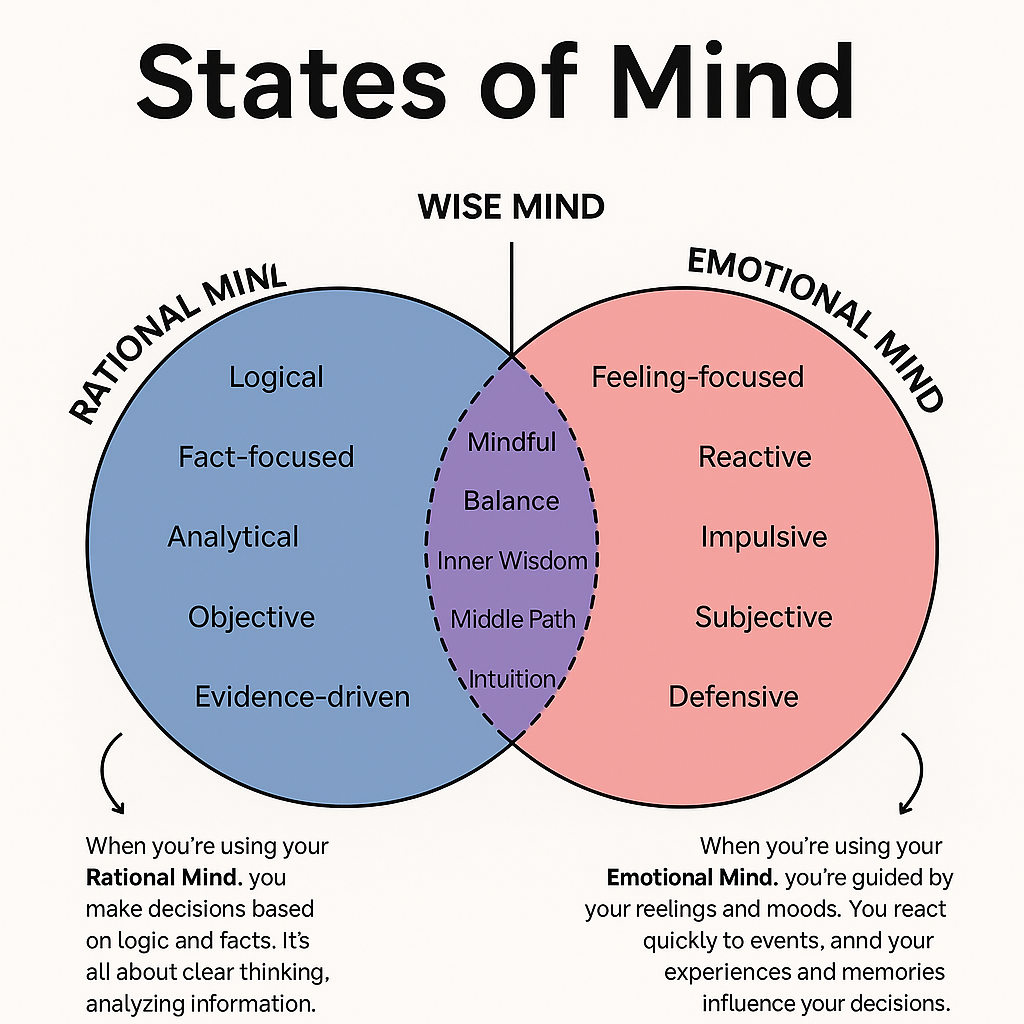
Key Takeaways The three states of mind explain how thoughts, emotions, and decisions interact Mental health depends on flexibility, not eliminating emotion Wise Mind integrates logic and feeling for balanced decision-making Many psychiatric conditions reflect disruptions between states of mind Therapy and psychiatry help restore access to Wise Mind Understanding the Different States of Mind […]
Breathing Techniques for Anxiety: Fast, Evidence-Based Tools to Calm the Mind
Key Takeaways Breathing techniques rapidly regulate the nervous system and reduce anxiety. Methods like diaphragmatic breathing, box breathing, and 4–7–8 breathing support emotional stability. Breathwork enhances treatment for ADHD, OCD, depression, eating disorders, BPD, psychosis, and trauma. Consistent daily practice strengthens results and improves resilience. Integrative Psych offers comprehensive care integrating these tools into therapy […]
The Bio Psycho Social Model: A Holistic Framework for Modern Mental Health Care
Key Takeaways Mental health conditions arise from a blend of biological, psychological, and social influences. The Bio Psycho Social Model provides a precise, holistic lens for understanding complex psychiatric conditions. Integrating these three domains improves diagnosis, treatment planning, and long-term outcomes. Leading practices like Integrative Psych use this model alongside advanced clinical tools for personalized […]
The Rise of Stimulant Use in the U.S: Trends, Mental-Health Factors, and What Comes Next
Key Takeaways Stimulant prescribing in the U.S. has significantly increased, especially among adults and women. ADHD is now recognized as a lifelong condition, contributing to higher diagnosis rates. Telehealth expansion after COVID-19 accelerated access to evaluations and stimulants. Comorbidities like anxiety, depression, OCD, BPD, psychosis-spectrum conditions, and eating disorders shape treatment decisions. Responsible prescribing requires […]
How Does Ketamine Therapy Work? A Complete Guide to Its Benefits and Mental-Health Impact

Key Takeaways Ketamine acts rapidly by boosting glutamate, neuroplasticity, and emotional flexibility. It helps with treatment-resistant depression, anxiety, OCD, PTSD, and suicidality. The therapy involves dissociation, introspection, and structured integration sessions. Benefits often begin within hours and may last weeks with proper maintenance. Not suitable for individuals with active psychosis or uncontrolled hypertension. Integrative Psych […]
How Therapy with Medication Improves Treatment Outcomes: An Evidence-Based Guide
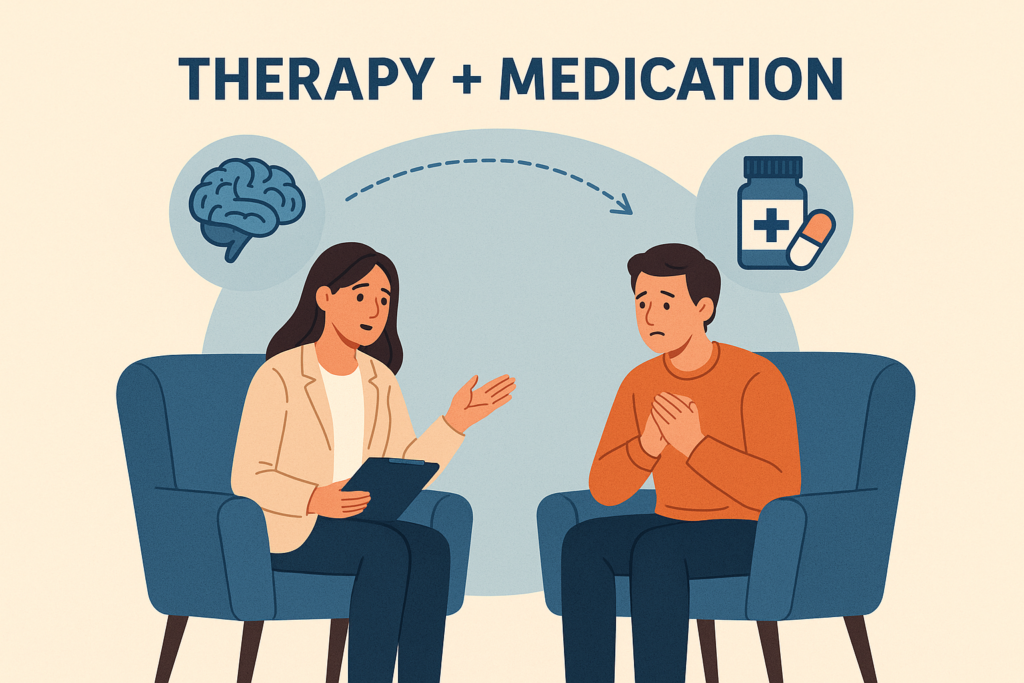
Key Takeaways Combining psychotherapy and medication produces better outcomes than either alone in many mental-health conditions. Medication addresses biological/physiological dysregulation; therapy addresses behavioural, cognitive and relational factors—together they create synergy. For disorders such as depression, anxiety, ADHD, OCD, schizophrenia, BPD, eating disorders and psychosis, integrated care improves symptom reduction, functioning, and reduces relapse. Clinicians and […]